Two very different questions hide inside one search bar. Some people want to know what a licensed plumber earns in North Carolina — maybe they’re weighing a career change, maybe they’re just curious why the invoice looked the way it did. Others want to know what hiring a plumber is going to cost them. We’re answering both, with real numbers, no guesswork, and zero jargon you need a wrench to translate.
Spoiler: plumbers earn a solid, steady wage in North Carolina. What you pay them per hour is a different number entirely, and the gap between the two is where things get interesting.
Licensed Plumber Salaries in North Carolina: The Real Numbers
Wage data varies a bit by source, since each platform pulls from a different pool of job postings and self-reported salaries. Here’s the honest range for licensed plumbers working in North Carolina:
- ZipRecruiter puts the average North Carolina licensed plumber at roughly $67,481 per year, or about $32.44 an hour.
- com estimates the broader plumber category (all experience levels) at $61,589 a year, around $30 an hour, with a typical range of $45,727 to $77,569.
- Glassdoor’s self-reported figures run higher, averaging $73,415 a year, or roughly $35 an hour, based on salaries submitted by North Carolina plumbers.
- The U.S. Bureau of Labor Statistics tracks plumbers, pipefitters, and steamfitters together nationally, with a median of $62,970 a year ($30.27/hour) as of the most recent OEWS release. North Carolina generally sits close to, or slightly under, that national median.
Notice the spread. A first-year apprentice and a 20-year master plumber running his own van both get counted as “plumbers” in some of this data. Experience, license tier, and whether someone owns the business change the number a lot.
What Actually Moves a Plumber’s Paycheck in NC
Pay in the trades isn’t random. A handful of factors do most of the work:
- License level: North Carolina doesn’t require a journeyman license. Plumbers work toward a Limited or Intermediate contractor license after two to three years of on-the-job training, and an Unlimited license after four years plus a state exam.
- Hours logged: the state requires 4,000 hours of experience, including 2,000 hands-on hours, before a plumber can sit for the licensing exam. That’s roughly two years of real fieldwork, not a weekend course.
- Location inside the state: metro areas with heavy commercial and new-construction demand, like the Raleigh-Durham Triangle and Charlotte, tend to pay better than smaller towns.
- Union vs. non-union: union plumbers in North Carolina typically earn 25 to 40 percent more in total compensation once benefits are factored in, though union presence is limited in a right-to-work state.
- Specialization: backflow testing, gas line work, and commercial mechanical systems (driven in part by the Triangle’s growing data-center and lab construction) usually pay above general residential repair work.
So What Do YOU Pay? Plumber Cost Per Hour, Explained
Here’s the part that actually affects your wallet. What a plumber earns and what a plumber charges are not the same figure — the hourly rate you pay covers a lot more than the technician’s paycheck.
A company’s hourly charge also has to cover the truck, the fuel, the tools, insurance, licensing fees, dispatch software, and yes, a fair profit margin so the business is still around the next time you need them. That’s why the average plumber cost per hour lands well above the average plumber’s wage.
| Type of Plumbing Work | Typical Hourly Rate | Notes |
| Handyman / apprentice-level repairs | $25 – $45/hr | Fine for very minor fixes, not licensed work |
| Standard residential plumber | $75 – $150/hr | Most homeowners land in the $90–$125 range |
| Master / licensed plumber, larger jobs | $100 – $200/hr | Repipes, water heaters, gas lines |
| Emergency / after-hours call | $150 – $300/hr | Burst pipes, weekend and holiday calls |
These figures line up across HouseCallPro, HomeGuide, and Angi’s pricing research, all pulling from thousands of real customer estimates rather than guesswork.
Most standard residential plumbing rates fall between $75 and $150 per hour, with the typical homeowner paying somewhere around $90 to $125 per hour for daytime, non-emergency work. Master plumbers and commercial jobs start closer to $100 to $200 per hour. A full job, including parts and labor, averages around $340, according to Angi’s national data, though small repairs can run under $150 and major work can climb into the thousands.
Flat Rate vs. Hourly: Which Actually Saves You Money?
Plenty of companies quote a flat rate instead of a straight plumber hourly charge, and there’s a reason for that. A flat rate protects you from a job running long. An hourly rate protects you from paying for work that finishes fast. Neither is a scam — they’re just different ways of splitting the risk between you and the plumber.
A good rule of thumb: ask for the flat rate on anything predictable, like a water heater swap or a toilet install. For diagnostic work, where nobody knows what’s actually wrong with your pipes yet, hourly billing with a clear stated rate is usually fairer to both sides.
Why Plumbing Services in Raleigh, NC Cost What They Cost
Raleigh sits in one of the fastest-growing metro areas in the country, and that growth pushes rates upward in a few predictable ways. Skilled trade labor is in demand across new residential construction, so plumbers can be selective about the work they take. Older homes inside the Beltline, meanwhile, often need more diagnostic time thanks to outdated pipe materials and Piedmont clay soil that isn’t gentle on underground lines.
None of that means Raleigh homeowners should expect to overpay. It means a fair quote for plumbing services in Raleigh, NC should reflect real labor, real parts, and a company that shows up licensed and insured — not just whoever answers the phone fastest.
Finding a Plumber in Holly Springs, NC
Holly Springs has grown fast, and a lot of that growth is newer construction, which is generally kinder to a plumber’s diagnostic time than a 1960s farmhouse. That can mean slightly more predictable pricing on standard jobs. Still, a licensed plumber in Holly Springs, NC should hand you the same things any reputable Triangle plumber should: a clear rate before work starts, a permit pulled when the job requires one, and a written warranty on labor.
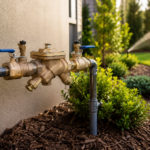
Backflow testing is worth a specific mention here. It’s required annually on many commercial and irrigation systems in North Carolina, and it’s a service that’s easy to overlook until a compliance letter shows up in the mail.
Frequently Asked Questions
What’s a fair price of a plumber per hour in North Carolina?
For standard residential work, $75 to $150 per hour is a reasonable range across most of the Triangle. Anything well outside that deserves a second quote.
Why is the plumber hourly charge higher than what plumbers say they earn?
Your hourly rate covers overhead: the vehicle, tools, insurance, licensing, and the business itself, not just the technician’s wage.
Do North Carolina plumbers need a license?
Yes. North Carolina requires 4,000 hours of documented experience, including 2,000 hands-on hours, before a plumber can sit for the state licensing exam.
Is hourly or flat-rate pricing better?
Flat rate suits predictable jobs like installations. Hourly billing tends to be fairer for open-ended diagnostic or repair work.
Need a Straight Answer, Not Just an Estimate?
Arbor Plumbing & NC Backflow serves Garner, Raleigh, Holly Springs, and the wider Triangle with licensed, upfront plumbing work — no mystery pricing, no guessing games. Get in touch with Arbor Plumbing for a clear quote before anyone touches a wrench.