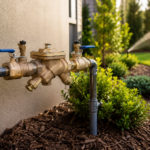
Nobody wakes up excited to think about backflow preventers. Fair enough. But if you own a home or business in Durham, this small brass device sitting near your water meter protects your drinking water from things you really don’t want in it. Skip the annual test, and you risk fines, a shut-off notice, or worse, actual contamination.
This guide breaks down what backflow testing in Durham involves, who needs it, and how to stay compliant without losing a weekend to city paperwork.
What Backflow Actually Means (And Why Durham Takes It Seriously)
Water is supposed to flow one direction: from the city main into your home or building. Backflow happens when that direction reverses.
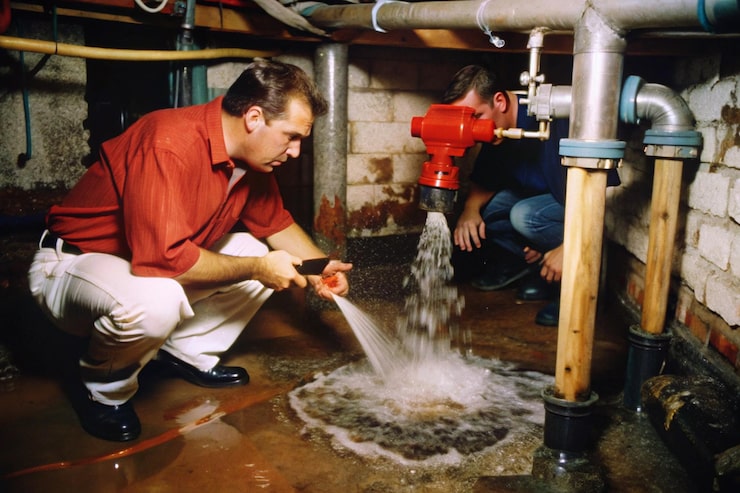
Two things cause it. A sudden pressure drop from a water main break or heavy firefighting demand pulls water backward through a siphon effect. Or a connected system, like an irrigation line or boiler, runs at higher pressure than the main and pushes contaminated water back into it.
The Environmental Protection Agency’s cross-connection control program exists specifically to prevent contaminants from entering a drinking water distribution system. Chemicals, fertilizer, pesticide residue, even bacteria from a garden hose can travel back into the pipes that supply your neighbor’s kitchen sink.
This isn’t theoretical. The Texas Commission on Environmental Quality documented a real case where a worker mixing pesticide left a hose submerged in the tank. A nearby city crew opened a flush valve, the pressure drop reversed the flow, and pesticide-laced water flowed back through the hose into the property’s water lines. The contamination was caught before it reached the main, but crews still had to flush both the property’s lines and the city’s distribution line, and residents were told to avoid drinking the water until testing confirmed it was safe.
That’s the exact scenario backflow preventers exist to stop.
Who Needs Backflow Testing in Durham
If your property has a “testable” backflow assembly, the City of Durham requires it. That typically includes:
- Commercial buildings and restaurants
- Properties with irrigation or lawn sprinkler systems
- Buildings with fire sprinkler systems
- Properties with boilers, pools, or other auxiliary water systems
- Many multi-family and mixed-use buildings
Durham’s Department of Water Management runs the city’s Cross-Connection Control (CCC) Program, and the rule is simple: all backflow assemblies must be tested annually. There’s no gray area on frequency. Once a year, every year, for as long as the assembly stays installed.
How Durham’s Annual Testing Program Works
Durham doesn’t leave testing up to memory. The CCC office sets the annual testing schedule and mails a notification to the property owner, so you’re not expected to track your own due date on a sticky note.
The city manages the whole process through an online platform called BSI (Backflow Solutions, Inc.). The portal handles online test submittals, real-time compliance data, and automated notifications. Property owners can log into the water customer dashboard to check compliance status, pull past test records, and search for approved testers in the area.
Test reports don’t get submitted for free. A filing fee of $12.95 applies per test report submitted through BSI. It’s a small line item, but worth budgeting for if you manage multiple properties.
What Happens If Your Assembly Fails
Failing a test isn’t the end of the world, but it comes with a clock attached. The property owner has 15 days to repair or replace a failed assembly and meet the annual test requirement. That 15-day window can shift only if you contact Durham’s CCC office directly to negotiate a new deadline.
Skip the repair, and you’re looking at continued noncompliance, which the city tracks and enforces.
Who’s Allowed to Actually Test Your Backflow Preventer
Here’s where a lot of property owners get tripped up: you cannot legally test your own backflow assembly, even if you’re mechanically inclined and own a wrench.
Testing requires interrupting the water supply, and North Carolina law treats that as a licensed activity. Under North Carolina General Statute 87-21(c) and 21 NCAC 50.0506, anyone who interrupts the water supply must be properly licensed, since testing a backflow preventer means shutting off one or both valves on the assembly during the process.
Durham also runs its own certification pipeline for testers. The city offers a forty-hour, five-day course for people seeking certification as a backflow preventer assembly tester, and certified testers must renew that certification every two years. That’s a serious training requirement, not a weekend seminar. It’s also why hiring a certified local plumber matters more than grabbing the cheapest name on a search results page.
Testers certified in Durham can generally work in neighboring jurisdictions too, through a reciprocity agreement that covers cities like Raleigh and Charlotte after a brief local orientation. That flexibility helps if you own properties across the Triangle, not just within Durham city limits.
What Actually Happens During a Backflow Test
A certified tester connects gauges to the assembly’s test cocks and checks that each internal check valve holds pressure correctly without allowing reverse flow. The process takes most residential and small commercial assemblies well under an hour.
During the test, water to that line gets shut off temporarily. It’s not a major disruption, but it’s worth knowing in advance if you’re running a restaurant kitchen or a business that depends on continuous water flow.
Once the test wraps up, the tester submits results directly to BSI. You get a compliance record, the city gets its data, and you don’t have to chase down paperwork afterward.
Three Mistakes Durham Property Owners Make With Backflow Testing
Assuming the notification letter is optional. It isn’t. Durham mails a reminder, but the legal obligation to test annually exists whether or not that letter shows up in your mailbox.
Waiting until the 15-day repair window to find a tester. Certified testers, especially good ones, get booked. Scrambling after a failed test adds stress you don’t need.
Forgetting about irrigation-only backflow devices. If you removed your lawn irrigation system but never notified the city, you’re likely still on the testing schedule for a device that no longer needs testing. Durham requires a formal request to remove that assembly from the annual cycle.
Why This Isn’t a DIY Job (Even If You’re Handy)
Beyond the licensing requirement, there’s a practical reason to hire a professional: a failed test on a fire protection system backflow preventer can leave a building without proper fire suppression coverage until it’s fixed. That’s not a risk worth taking to save a service call fee.
A properly trained tester also catches early warning signs, like a slowly failing check valve, before it becomes an outright failure. That’s the difference between a routine annual visit and an emergency repair call during a heat wave, when every plumber in the Triangle is already booked solid.
Backflow Testing With Arbor Plumbing & NC Backflow
Arbor Plumbing & NC Backflow works with Durham property owners who want backflow testing handled correctly, on schedule, and without the runaround. From annual compliance testing to repairs on failed assemblies, the team understands Durham’s Cross-Connection Control requirements and the BSI reporting process from the inside.
If a notification letter just landed in your mailbox, or your commercial property is overdue on its annual test, reach out before the 15-day repair clock becomes a problem. A quick call now beats a compliance headache later.